Virginia
Article
Virginia is a recurring place in the Astral Codex Ten archive, appearing 19 times across 19 issues between February 24, 2021 and April 01, 2026. The archive places it in contexts such as “deep in the countryside of Virginia”; “on the night of the Virginia election”; “Metaculus question on Virginia workplaces”. It most often appears alongside California, New York, Texas.
Metadata
- Category: Places
- Mention count: 19
- Issue count: 19
- First seen: February 24, 2021
- Last seen: April 01, 2026
Appears In
- Book Review: Fussell On Class
- 15
- Mantic Monday: Dogs In Wizard Hats
- Biography of Jason Shea, 44th US President
- Highlights From The Comments On San Fransicko
- Highlights From The Comments On Bobos In Paradise
- Henrietta Lacks Seems Like A Nice Person, But Not A Scientific Hero
- Book Review: The Geography Of Madness
- Spring Meetups Everywhere 2023
- Spring Meetups Everywhere 2024
- Meetups Everywhere 2024: Times & Places
- Prison And Crime: Much More Than You Wanted To Know
- Highlights From The Comments On Lynn And IQ
- Meetups Everywhere Spring 2025: Times & Places
- Moldbug Sold Out
- Highlights From The Comments On AI Geoguessr
- ACX Grants 1-3 Year Updates
- Meetups Everywhere 2025: Times and Places
- Meetups Everywhere Spring 2026: Times & Places
Related Pages
-
- California (11 shared issues)
-
- New York (10 shared issues)
-
- Texas (10 shared issues)
-
- Atlanta (9 shared issues)
-
- Chicago (9 shared issues)
-
- Europe (9 shared issues)
-
- Nigeria (9 shared issues)
-
- North Carolina (9 shared issues)
-
- ACX (8 shared issues)
-
- Australia (8 shared issues)
-
- Baltimore (8 shared issues)
-
- Colorado (8 shared issues)
External Links
Source Context
Recovered passages from the original issue text. When the raw archive preserved outbound links inside the source passage, they are listed directly under the quote.
Where then may a member of the top classes live in this country? New York first of all, of course. Chicago. San Francisco. Philadelphia. Baltimore. Boston. Perhaps Cleveland. And deep in the countryside of Connecticut, New York State, Virginia, North Carolina, Pennsylvania and Massachusetts. That's about it. It’s not considered good form to live in New Jersey, except in Bernardsville and perhaps Princeton, but any place in New Jersey beats Sunnyvale, Cypress, and Compton, California; Canton, Ohio; Reno, Nevada; Cheyenne, Wyoming; Albuquerque, New Mexico; Columbus, Georgia, and similar army towns.
Here are some screenshots I took within a few moments of each other on the night of the Virginia election:
And finally, of all sad tales of mice and men, the saddest is probably this Metaculus question on Virginia workplaces:
For example: during his career, Xi served as party secretary of four different areas: Zhengding, Fujian, Zhejiang, and Shanghai. A faithful conceptual translation would have had Shea serving as county supervisor of some small county in Virginia, then mayor of Miami, then governor of North Carolina, then governor of New York. This career progression doesn’t make a lot of sense in a US context (except for this guy!), so I turned him into a consultant in Virginia, Florida, and North Carolina before becoming NYC mayor. Maybe I should have just let him be governor of a bunch of states and let it be implausible, I don’t know.
Inline links: this guy
California and Seattle are among the rare US cities where it never gets unbearably hot or cold, and do have a lot of homeless people. But cities in Florida, Virginia, and North Carolina also have okay climates without too many homeless, so I’m not sure how much to update on this.
You saw the same thing with white Catholics. Even ones from very old American families who didn't have to deal with anti-immigrant sentiment. As late as the mid-20th century you had some Virginians going to places like William & Mary because they weren't New Englanders.
Well, her life and legacy are now successfully being acknowledged and celebrated. Congress passed a resolution honoring Lacks in 1997. She has received honorary degrees, the WHO’s Director General Award, and membership in the National Women’s Hall Of Fame. Atlanta declared October 11 “Henrietta Lacks Day”. There is a high school named after her in Washington, a plaza named after her in Virginia, and an asteroid named after her somewhere between Mars and Jupiter. In 2014, at the 9th annual Henrietta Lacks Memorial Lecture, the dean of Johns Hopkins announced the college’s new research building would be named after Lacks, saying:
This image (source) of a witch stealing a man’s penis, with a box of previously-stolen penises to her right accompanies the 1411 poem “Flowers Of Virtue” in its 1486 edition. Malleus Maleficarum was published in 1486, so if the original text of Flowers Of Virtue contained the incident this picture refers to, it would predate Malleus. But the original text is written in poetic medieval German and I can’t find a good translation. When I wrote my review of the Malleus, people were surprised at the penis-stealing witch chapters. Yet nothing could possibly be less surprising; the penis-stealing witches are timeless and omnipresent. When commenters continued to doubt, I promised them this review of Frank Bures’ Geography Of Madness. II. Frank Bures is a journalist. In 2001, he came across an unusual BBC article: a mob had killed twelve people in Nigeria, believing them to be penis-stealing witches. A few months later, a similar article: five people, Benin. He tried to pitch a story about the phenomenon to his editor, who “said he couldn’t pay me to fly to Nigeria and find essentially . . . nothing”. For some reason - and this is the point at which I start to worry about narrator reliability - Bures became obsessed with this. He couldn’t get it out of his mind. He started scraping together money to visit Africa on his own, story be damned: Nigeria gnawed at me. I knew that it was a terrible time to leave. I knew that [my wife] Bridgit, newly pregnant, wouldn’t want me to go. But I also knew that I had to, and that if I didn’t it would be a lifelong regret. . . three months later, I was the lone tourist on a plane full of Nigerians descending to Lagos. Africa is a relative newcomer to penis-stealing witches: The first recorded incident of penis theft in Africa I could find took place in Sudan in the 1960s. But in the mid- to late seventies in Nigeria, there were waves of well-documented cases. One of these happened in the northern city of Kaduna, where a psychiatrist named Dr. Sunday Ilechukwu was working in his office when a policeman arrived, escorting two men. One of them said he needed a medical assessment: He had accused the other of making his penis disappear. As with [a previously discussed incident], this had caused a disturbance in the street. During Ilechukwu’s examination, he later recounted, the victim stared straight ahead while the doctor examined his penis and pronounced him normal. “Exclaiming,” Ilechukwu wrote in the Transcultural Psychiatric Review, “the patient looked down at his groin for the first time, suggesting that the genitals had just reappeared.” According to Ilechukwu, this was part of an epidemic of magical penis theft that swept through Nigeria between 1975 and 1977. “Men could be seen in the streets of Lagos holding on to their genitalia either openly or discreetly with their hand in their pockets,” Ilechukwu wrote. “Women were also seen holding on to their breasts directly or discreetly, by crossing the hands across the chest . . . Vigilance and anticipatory aggression were thought to be good prophylaxes. This led to further breakdown of law and order.” During an incident, the victim would yell: “Thief! My genitals are gone!” Immediately, a culprit would be identified, apprehended by a crowd, and often killed. …but it’s been making up for lost time. Bures was able to find and interview one previous penis theft victim, plus the friend of another. Both described similar stories: someone had bumped up against them under weird circumstances, they immediately noticed their penis was much smaller than usual, they called out the culprit, and - apparently because the witch involved didn’t want to get in trouble - their penis was restored. Whatever weird itch this topic had given Bures, this didn’t satisfy him. He writes, very lucidly, about a desire to get closer to “the story”. He started bumping up against random Nigerians in suspicious ways, hoping one of them would accuse him of stealing their penis. Bures was an obvious foreigner, and a these panics often resulted in the suspected penis-stealer getting lynched, so this was a crazy thing to do. He could easily have died. Instead, everyone politely ignored him, nothing happened, and a slightly-disappointed Bures flew back to his poor family and abandoned his weird obsession. III. …for four years. After that the bug bit him again and he flew to Asia, long a center of penis-stealing witch activity. There are nature documentaries on lions, dolphins, even dinosaurs. They all share a common pattern: you talk about your subject’s habitat, their diet, their behaviors. The Asian half of The Geography Of Madness has the feel of a nature documentary on penis-stealing witches. And the last beat of every nature documentary has to be: this majestic creature, which once roamed from one end of the region to the other, is now endangered, threatened by increasing globalization and industrial activity. This is true for the witches also. Bures’ time in Hong Kong was a bust. There was a penis theft panic there forty years earlier, and he was able to interview some of the doctors who treated it. But they all said that was long ago. Now everybody is Westernized and has Western fears like vaccine injury or structural racism. They get Western mental disorders like depression and anorexia. The idea of witches stealing their penises seems as risible to them as it probably does to you. Singapore was also a bust. Bures had hoped it wouldn’t be, because it’s full of Malaysians, and Malaysia holds a special place in history as the spot where penis-stealing witches first made contact with Western science. The Malaysian word for the condition is koro (it means “head of a turtle”, based on an analogy to the penis retracting into the body the same way a turtle’s head retracts into its shell), and it is by this name that the condition gets listed in the DSM and the rest of the medical literature. Neither I nor Bures was able to find many ethnic Malays worrying about koro; most of the activity seems to be from Malaysian-Chinese. The Chinese definitely worry about it, attributing it to a wide variety of causes including poisoning, yin-yang imbalance, and - yes - witches. But Bures found nothing among any ethnicity. Once again, all the doctors said it used to be common, but disappeared as the city industrialized and adopted Western ways. Guangzhou was also a bust. The doctors said the same thing - in the old days, there would be huge epidemics of koro, social contagions that would impact hundreds of people at once. Now only a few superstitious rural people still believed. One traditional healer said he saw “three or four” cases a year. All the educated people had moved on. I once saw a nature documentary on Tasmanian tigers. Most people believe these have been extinct since 1930. Still, there are occasional unconfirmed sightings, especially in a remote area called Cape York, and every so often some scientists trudge off to Cape York with traps and cameras in the hopes of getting lucky. Bures decides end his own nature documentary with an expedition to the Cape York of the penis-stealing witches. This is a remote island village in China called Lin’gao, where in 1984: . . . rumors spread of a fox ghost - sometimes disguised an old woman roaming the land—collecting penises in covered baskets she carried on a shoulder pole. When two young men approached her and told her to uncover the baskets, they looked inside, saw that the baskets were filled with penises and died instantly of fright. Panic about koro would hit a village and last three to four days. When residents heard about a case in a neighboring village, the panic would subside, since that meant the ghost had moved on. The attacks slowly made their way around the island. The ghost struck at night, when villagers were sleeping. A chill would creep into the room, and suddenly the victim would feel his penis shrinking inward. He would grab it and run outside for help. A twenty-eight-year-old office worker was at home one night when: > “ . . . he heard a gong being beaten and the terrifying noises made by people who were panicking in a nearby neighborhood. He suddenly became anxious and experienced the sensation that his penis was shrinking. He was seized with panic and shouted loudly for help. Several men in the neighborhood rushed in and tried to rescue him by forcefully pulling his penis and making loud sounds to chase away the evil ghost that was thought to be affecting him.” Neighbors and family members were enlisted in rescue operations. Victims were beaten with sandals and slippers while the middle finger of their left had was squeezed, so that the ghost could exit the body there. The epidemic engulfed the island, with the exception of the Li and Miao minorities, who seemed to be immune to such fears. Researchers estimated that between 2,000 and 5,000 people were affected, but that “no one died from genital retraction.” One baby, however, did die when his mother tried to feed him pepper juice, and a girl was beaten to death during a two-hour exorcism. “Numerous men suffered injuries to their penises as a result of ‘rescuing’ actions.” Iron pins were sometimes inserted through the nipples of women to prevent retraction, which caused infections as well. This was, as far as anyone knows, the last great koro epidemic in Asia. Bures had a terrible time getting to Lin’gao. He had equal trouble getting an interpreter; the natives spoke a language called Be, very distantly related to Thai but not at all to regular Chinese. Finally he found someone who was able to contact a local shaman. Like any good doctor, the shaman referred him to a specialist - in this case, the designated anti-ghost shaman, who lived in a different village. He spent most of his time off on various ghost-fighting missions, but eventually Bures and his team were able to track him down. I want you to picture the scene. An American journalist has been traveling the world in search of a dying variety of witchcraft. Now he’s reached the end of the line, the wildest and most primitive region of China. With great difficulty, he has procured an interpreter. Together, they consult a shaman, who sends them on a quest to find a second, wiser shaman who specializes in ghosts. After many trials and tribulations, he reaches the second, wiser, ghost-specialist shaman, who invites him into his home, filled with strange charms and magical images. “Tell me your question,” says the shaman. And Bures asks: “What do you know about penis-stealing witches?” . . . and the shaman answers: “Haha, no one believes in that stuff anymore.” IV. So as a nature documentary, The Geography of Madness is kind of a bust. Still, Bures rescues it with some great analysis of culture-bound mental illness. A culture-bound mental illness is one that only affects people who know about it, and especially people who believe in it. Often it doesn’t make sense from a scientific point of view (there’s no such thing as witches, and the penis can’t retract into the body). It sometimes spreads contagiously: someone gets a first case, the rest of the village panics, and now everyone knows about it / believes in it / is thinking about it, and so many other people get it too. Different cultures have their own set of culture-bound illnesses. Sometimes there are commonalities - many cultures have something something penis something witches - but the details vary, and a victim almost always gets a case that matches the way their own culture understands it. THESE PEOPLE ARE NOT MAKING IT UP. I cannot stress this enough. There are plenty of examples of people driving metal objects through their penis in order to pull it out of their body or prevent the witches from getting it or something like that. There is no amount of commitment to the bit which will make people drive metal objects through their penis. People have died from these conditions - not the illness itself, which is fake, but from wasting away worrying about it, or taking dangerous sham treatments, or getting into fights with people they think caused it. If you think of it as “their unconscious mind must be doing something like making it up, but their conscious mind believes it 100%”, you will be closer to the truth, though there are various reasons I don’t like that framing. In Rajasthan, India, people come to the hospital with gilahari (lizard) syndrome. Patients say a lizard-like mass, sometimes visible as a skin swelling, is crawling around the body. They express terror that it will reach their airway and suffocate them. Japanese people may contract jikoshu-kyofu, a debilitating fear that they have terrible body odor. No amount of reassurances by friends and psychiatrists can convince these people that they smell normal, nor will any number of deodorants or perfumes make them comfortable. The French suffer from bouffée délirante, where a perfectly healthy person suddenly becomes completely psychotic, with well-formed hallucinations and delusions - then recovers just as suddenly, sometimes over hours or days. This is not how psychosis works anywhere except France and a few former French colonies. Traditional Chinese medicine monitors the balance between yin and yang. The male orgasm can deplete yang, and sure enough in China (but nowhere else) some men suffer traditional symptoms of yang depletion after they orgasm. “The symptoms can last weeks to months after a single orgasm, [and include] chills, dizziness, [and] backache”. The phrase “run amok” comes from Malaysia, where it referred to a specific phenomenon: some person who had been unhappy for a long time would suddenly snap, kill a bunch of people, then say they had no memory of doing it. Malaysian culture totally rolls with this and doesn’t hold it against them; the unhappiness is a risk factor for possession by a tiger spirit, which commits the killings. Although Malays have been doing this since at least the 1700s, there are some fascinating parallels with modern US mass shootings that suggest the damn tiger spirits have finally made it to the US common psychological origins. I have seen exactly one demonic possession case in my ten years as a psychiatrist. The man fell to the ground, mouth foaming, chanting strange syllables and the names of Biblical demons. My attending doctor at the time - one of those people who somehow manages to be an expert in everything - was an expert in demonic possession, and told us that he was in no way psychotic, antipsychotics wouldn’t help him (except insofar as they help everyone by decreasing all behaviors), and he needed to “work through his issues”. The patient was uncooperative - he was only visiting MDs because the local bishop wouldn’t call in an exorcist until he got a psych exam - and eventually left against medical advice. After going down the list, Bures asks the correct next question: how do we know whether or not our own mental illnesses are just as culture-bound as the Japanese or Malaysians’? Cultures that believe in witches have witch-related culture-bound illnesses; cultures that believe in demons have demon-related ones. We believe in science, so we should expect sciencey-sounding culture-bound illnesses, and these might be hard to tell apart from other, more physical conditions. So how suspicious should we be, and of what? Certainly we have some culture-bound mental illnesses. Electromagnetic hypersensitivity is a condition where some people supposedly become very sick when exposed to electromagnetic fields (like from cell phones). This sounds very scientific and makes perfect sense according to our culture, but researchers have found that placebo electrical devices make them exactly as sick as real ones, and that devices they don’t know about don’t make them sick at all. These people’s pain is real, and their lives are very difficult (although a few have found refuge in the National Radio Quiet Zone, an area in Virginia where the government enforces a ban on electromagnetic transmissions for secret military reasons). But their condition only afflicts them because they believe in it, much like with koro. Fine, everyone knows that one’s not real. What about DSM-style mental disorders, the stuff everyone’s supposed to believe in? Are those culture-bound? Unfortunately, I think Bures kind of flubs this section. He decides to focus on PMS (premenstrual syndrome), which is officially included in the DSM as PMDD (premenstrual dysphoric disorder). After discussing the history of hysteria, he writes that: Today, hysteria is never diagnosed, except by unwise husbands. In 1931, however, an American gynecologist named Robert Frank revived the idea in a new guise. He published an article titled, “The hormonal causes of premenstrual tension.” Frank described symptoms that occurred in the week before menstruation: irritability, bloating, fatigue, depression, attacks of pain, nervousness, restlessness, and the impulse for “foolish and ill considered actions,” due to ovarian activity. Again, the cause was the uterus. Then in 1953, British physician Katharina Dalton elaborated on this, arguing the condition came from fluctuation of estrogen and progesterone. She called it Premenstrual Syndrome, and soon symptoms grew to include: anxiety, sadness, moodiness, constipation or diarrhea, feeling out of control, insomnia, food cravings, increased sex drive, anger, arguments with family or friends, poor judgment, lack of physical coordination, decreased efficiency, increased personal strength or power, feelings of connection to nature or to other women, seizures, convulsions, asthma attacks, not to mention flare ups in asthma, allergies, sinusitis, anxiety disorders, irritable bowel syndrome, migraines, and multiple sclerosis. If any of these symptoms occurred in the second half of the menstrual cycle, one had PMS. Estimates of the number of women afflicted ranged from 5 percent to 95 percent. In the 1980s, three women in the UK were tried for arson, assault and manslaughter. The three all claimed they had diminished responsibility due to PMS, and got reduced sentences on the condition that they underwent hormone treatment. After that, according to one study, American women flooded doctors with requests for help with their PMS. “Popular groups like PMS Action were founded to promote recognition and treatment of PMS by medical professionals. Private PMS clinics began to appear in the USA, modeled after those in the UK, and progesterone therapy was enthusiastically adopted, much to the chagrin of many gynaecologists who viewed its use as ‘unscientific’ and ‘commercial’, not to mention unlicensed." Based on all this, the 1987 version of the DSM-III included a new category: Late Luteal Phase Disorder (luteal refers to progesterone). It was proposed as a topic for further research, but despite the absence of such research, it was included in the 1994 edition of the DSM-IV under the name Premenstrual Dysmorphic Disorder, or PMDD.96 In 2013, in the DSM-5, it was given its own category as a full-fledged mental illness. Yet neither PMS nor PMDD occur in most cultures. There are no biomarkers to measure them by. No conclusive correlation has ever been found between estrogen or progesterone levels and PMS. As one study noted, “the more time that women of ethnic minorities spend living in the United States, the more likely they are to report PMDD. Thus, if we are to accept PMDD as a reified medical disorder, then we must also accept exposure to U.S. culture as a risk factor for contracting PMDD.” If it is a syndrome at all, it’s a cultural one. I asked my wife what she thought of this, and she told me: The day before her first-ever period, as a teenager, when she had never really thought about PMS, she felt exceptionally weird, emotional, and generally off, to the point where it seemed to demand an explanation. Then she had her first-ever period, and retroactively explains it as PMS.
NORFOLK, VIRGINIA, USA Contact: Willa Contact Info: walambert[at]pm[dot]me Time: Sunday, April 30th, 10:30 AM Location: Pagoda & Oriental Garden, 265 W Tazewell St, Norfolk, VA 23510. Moved to Fair Grounds instead of the Pagoda due to inclement weather. 806 Baldwin Ave # 2, Norfolk, VA 23517. I will wear a green shirt, green & yellow hat, and have an ACX MEETUP sign. Coordinates: https://plus.codes/8785VP82+XH Notes: We may decamp by 12:45 to wander around downtown and/or get lunch. Possible after-meetup hangout! If you can't make it to the meetup but can do lunch or something a little later, please email me. In Norfolk on a Wednesday in the future? We regularly meet Wednesday evenings at Fair Grounds (cafe in Ghent) from 17:00-19:30. There are meetups in Richmond or occasionally in Charlotesville. Check out Virginia Rationalists on LessWrong for Upcoming Events: https://www.lesswrong.com/groups/pLEbtx3BbdaLMXZKi
RICHMOND, VIRGINIA, USA Contact: Cedar Contact Info: cedar[dot]ren[at]gmail[dot]com Time: Saturday, May 06th, 02:00 PM Location: 2nd Floor of Whole Foods at 2024 W Broad St Coordinates: https://plus.codes/8794HG4Q+Q4 Event Link: https://www.lesswrong.com/events/h7x78HikDmsXfwwue/rva-meetup
BURLINGTON, VERMONT, USA Contact: Skyler Contact Info: skyler[at]rationalitymeetups[dot]org Time: Sunday, May 19th, 1:00 PM Location: In the Oakledge park. I’ll be wearing a tall blue and green hat. Coordinates: https://plus.codes/87P8FQ4F+5C Group Link: https://groups.google.com/g/burlington-lwacx Virginia BEDFORD, VIRGINIA, USA Contact: Eric F Contact Info: Ericf14159[at]gmail[dot]com Time: Saturday, April 20th, 10:00 AM Location: Bridge Street Cafe. 210 N Bridge St, Bedford, VA 24523 Coordinates: https://plus.codes/87928FPG+6V
Inline links: https://plus.codes/87P8FQ4F+5C, https://groups.google.com/g/burlington-lwacx, https://plus.codes/87928FPG+6V
BEDFORD, VIRGINIA, USA Contact: Eric F Contact Info: Ericf14159[at]gmail[dot]com Time: Saturday, April 20th, 10:00 AM Location: Bridge Street Cafe. 210 N Bridge St, Bedford, VA 24523 Coordinates: https://plus.codes/87928FPG+6V
Inline links: https://plus.codes/87928FPG+6V
NEWPORT NEWS, VIRGINIA, USA Contact: Daniel A is organizing the Newport News, VA meetup Contact Info: daniel[dot]m[dot]adamiak[at]gmail[dot]com Time: Saturday, May 4th, 2:00 PM Location: 12090 Jefferson Ave Ste 100, Newport News, VA 23606. There are benches outside of the Whole Foods that we will meet at. I will wear glasses and a red shirt. I will have a poorly made ACX sign. If you see someone with a well made sign, that's a different group. Coordinates: https://plus.codes/87954G36+C4C Group Link: https://www.lesswrong.com/groups/pLEbtx3BbdaLMXZKi Additional Notes: All are welcome. RSVPs are appreciated
BURLINGTON, VERMONT, USA Contact: Skyler Contact Info: skyler[at]rationalitymeetups[dot]org Time: Sunday, October 12th, 1:00 PM Location: In the Oakledge park. I’ll be wearing a tall blue and green hat, probably by the pavilion. Kids welcome. I’ll have pizza. Coordinates: https://plus.codes/87P8FQ4F+9M Group Link: https://groups.google.com/g/burlington-lwacx Virginia RICHMOND, VIRGINIA, USA Contact: Brandon Quintin Contact Info: brandonmquintin[at]gmail[d ot]com Time: Thursday, September 26th, 06:00 PM Location: Hardywood Pizza Kitchen and Taproom Coordinates: https://plus.codes/8794HG7R+XX Notes: RSVPs encouraged
I recently learned another disadvantage ex-cons can face when looking for a job - in Virginia, people on probation can’t enter premises with a liquor license, which means that they can’t work in most restaurants.
(source) … sub-Saharan Africa is also a hot spot. I wonder what’s wrong in Cuba - this is exactly the sort of easily gameable metric I would usually expect them to be good at, or at least carefully faking. If you’re interested, you can donate to Iodine Global Network here. Bob Jacobs writes: > His opponents pointed out both his personal racist opinions/activities That's the mildest possible way you could've put it. He wasn't someone who had "personal racist opinions" that he kept as "personal racist opinions". He was the editor-in-chief of Mankind Quarterly, a white supremacist journal that was founded by people like: Henry Garrett an American psychologist who testified in favor of segregated schools during Brown versus Board of Education, Corrado Gini who was president of the Italian genetics and eugenics Society in fascist Italy, and Otmar Freiherr von Verschuer who was director of the Kaiser Wilhelm Institute of anthropology human heredity and eugenics in Nazi Germany. He was a member of the Nazi Party and the mentor of Josef Mengele, the physician at the Auschwitz concentration camp infamous for performing human experimentation on the prisoners during World War 2. Mengele provided for Verschuer with human remains from Auschwitz to use in his research into eugenics. It's funded by the pioneer fund, an organization he was a board member of and that has been classified as a white supremacist hate group, with one of its first projects being to fund the distribution in US churches and schools of "Erbkrank", a Nazi propaganda film about eugenics. He's not just called racist, he *is* racist, he even describes *himself* as a racist. No contesting any of this. MM writes: I spent 18 months in a country where people are supposed to have an iq of about 70, according to the map. My neighbors and friends were mostly non-literate. They did not seem less intelligent than the people I know in my current (US) neighborhood or the people I grew up with (in the US). Most of them would not have performed well on IQ tests, though. They'd never attended school and had no familiarity with puzzle-solving. This was 35 years ago and most people had not seen movies or even photographs. I remember sitting with one older woman and helping her interpret a black-and-white photograph: this is the arm, here's where it connects to the body, etc. It's hard for people from literate societies with tons of exposure to text & graphical representations to see the extent of the gap. Calvin writes: I have a decent amount of experience with the intellectually disabled, and saying "cognitive issues are only responsible for a small part of the [communication] deficit" is so wrong that it makes me question everything else in this essay. Trust me, even making allowances for poor hearing or difficulty forming words, the cognitive issues are responsible for 90% of the deficit. An IQ of 60 is really low and it's a significant handicap. I was concerned to hear this - I have a little experience with the intellectually disabled, but it didn’t involve knowing people’s exact IQ, so I’m not very well-calibrated here. Looking for more information, I found https://www.hrw.org/reports/2001/ustat/ustat0301-01.htm, which purports to describe the characteristics of very low IQ people, mostly in the context of criminal justice (where lawyers often try to use a client’s low IQ as a mitigating factor - ie maybe he didn’t truly understand that crime is wrong). The report says things like: Although all persons with mental retardation have significantly impaired mental development, their intellectual level can vary considerably. An estimated 89 percent of all people with retardation have I.Q.s in the 51-70 range. An I.Q. in the 60 to 70 range is approximately the scholastic equivalent to the third grade […] Although mental retardation of any degree has profound implications for a person's cognitive and social development, it is a condition which in many cases is not readily apparent. While some of the mentally retarded, such as those whose retardation is caused by Down's syndrome or fetal alcohol syndrome, have characteristically distinctive facial features, most cannot be identified by their physical appearance alone. Unless their cognitive impairment is unusually severe (e.g. an I.Q. below 40), persons with mental retardation may be thought of as "slow" but the full extent of their impairment is often not readily appreciated, particularly by people who have limited contact with or knowledge of them, including police, prosecutors, judges, and other participants in the criminal justice system. Many capital offenders with mental retardation did not have their condition diagnosed until trial or during post-conviction proceedings. And gave some examples (slightly out of order for this list): Oliver Cruz, who was executed in Texas on August 9, 2000, had an I.Q. that was measured variously at 64 and 76. Cruz nonetheless insisted to reporters that, although he was perhaps "slow in reading, slow in learning," he was not mentally retarded. Mitigation specialist Scharlette Holdman recalled a client who so successfully hid his retardation from his attorneys that he allowed them to sign him up for college-level calculus classes, which he could not comprehend. He had gone through much of his schooling allowing his younger sister to complete his homework for him. When he was given papers to read in connection to his case, he would carefully stare at them. If he was asked a substantive question, he usually responded, "I don't recall." Only when experts in retardation evaluated him and investigators reviewed his school records and spoke to his family did lawyers discover he had mental retardation and had been considered "slow" since his early childhood. Another capital defendant "hid his mental retardation for most of his life by working at a very repetitive job as a switcher on the railroad. He lied about finishing high school. He was actually in special education classes and did not finish the sixth grade. He was drafted into the army and discharged because of his mental retardation. He lied about his service record. He often made things up so that people would not suspect mental retardation." Morris Mason, whose I.Q. was 62-66, was executed in 1985 in Virginia after being convicted of rape and murder. Before his execution, Mason asked one of his legal advisors for advice on what to wear to his funeral As one psychiatrist testified about a capital defendant with an I.Q. of between 35 to 45: "[People with mental retardation try] to go along with people that they suspect are in authority. For example, I asked [the defendant] where we were when I saw him, and he obviously didn't know, so I asked him if we were in Atlanta and he said `Yes, we are in Atlanta.' In fact, we were in Birmingham, Alabama. I could have said New York and he would have said `Sure, New York' These people are obviously not going to win Nobels anytime soon. But even the guy with IQ 35 - 45 was still talking to people. I think this supports the thesis that intellectually disabled people without specific syndromes can seem pretty normal most of the time. (though keep in mind that anything from the court system should be treated with a grain of salt - defense attorneys have an incentive to exaggerate the intellectual disability of their clients in the hopes that it gets them a lighter sentence) Lyman Stone writes: Emil's post isn't correct, however. We know from the recent Reich lab paper on long-run genetic selection that there was strong selection for IQ in the neolithic revolution, which implies agriculture strongly selects for IQ and ability to plan. Malawians are 60-80% subsistence farmers. Even a "normal" low-IQ person cannot do the implied math and long-term planning involved in this kind of farming. And in fact, economists routinely find that African small-plot subsistence agriculture is actually highly optimized; farmers make very precise choices about where to plant which seeds, which fertilizer to use, etc. Key point is basically: it really isn't true that an IQ 60 person can run a farm functionally. Moreover, mean IQ of 60 implies large shares even lower, at ranges that are uniformly nonverbal even without specific disability. And this is why in the actual record-level NIQ database, they truncate estimates below 60, because even the database managers realize these estimates are crazy. See my post here: https://substack.com/home/post/p-154757665 We know that people with extremely low IQs in the Flynn sense must be capable of subsistence agriculture, because pre-Flynn Effect, most of the West had extremely low IQs, and they were all doing subsistence agriculture. How is this possible? Responding to Lyman’s comment, I wrote: I stick to the claim in this post - that our estimates for what a very low IQ means are poorly-grounded, and that people with low IQs can do some pretty impressive things, especially if they're concrete and part of a cultural transmission package. Maybe this is the Joseph Henrich "Secret Of Our Success" thing. We know that Malawians get poor test scores in school, so it seems like there's some disconnect between do-well-on-tests intelligence and run-a-subsistence-farm intelligence, and the abstract/concrete and novel/cultural distinctions are the best explanation that I can think of. You say that "the phenotype that arises from a given tested IQ in America is clearly vastly worse than the phenotype arising from the same tested IQ in Africa", which I basically agree with. I think part of it is the syndromes issue raised above, and part of it is that maybe Malawians have zero contact with the culture of abstraction that IQ tests come out of whereas even very uneducated Westerners have some contact with it, and maybe another part of it is that whatever health/nutrition issues the Malawians have preferentially harm faculties responsible for more abstract tasks rather than more concrete ones. For an opposite data point, when I was in Haiti, my boss told me (secondhand, no personal experience) of extreme difficulties working with Haitians, like that they couldn't alphabetize files even when that was explained to them. Many Haitains are also successfuly subsistence farmers, so I think this also supports some kind of heavy abstract/concrete distinction. I don't think we're really disagreeing, just agreeing on something like the correlations that make up IQ being less valid outside the normal range. Maybe one way to look at it is to go back to the claim from the justice system document above, saying that people with IQ in the 60s are the mental equivalent of third-graders. The third-graders I know are very into Pokemon, and have all sorts of opinions on how if you add X bonus to a Y strength fire-type Pokemon and then play Z combo, it will [commence six weeks of droning on about different Pokemon cards]. Is this the sort of math/reasoning/strategizing that we don’t expect someone with IQ 60 to be able to do? Does the fact that third-graders can do it mean that we’re miscalibrated? I’m not sure. The part of Lyman’s comment that gives me the most pause is his observation that, if the mean IQ is 60, a decent fraction of people must be 45, and a non-negligible portion 30. At this point, even third-grader comparisons don’t save us. I guess this is where I bring in the claim that IQ breaks down as a guide to practical living skills below some point. You can see several more layers of response between me and Lyman here, but I was especially grateful for him teaching me two things I didn’t already know: First, he corrected my misconception about Reich on ancient European cognitive evolution. Reich had said that pre-agriculture Europeans were “2-3 standard deviations” below moderns. I had interpreted that as IQ deviations of 15 points, making them genetic IQ 55-70, which would have been pretty crazy. Stone tells me he actually meant PGS deviations, each of which was about 3-4 IQ points, so he’s claiming that pre-agriculture Europeans had genetic IQ of 90 (they probably also had lower IQ for environmental reasons).,
Contact: Adam Contact Info: adamisom[a t]hey[period]com Time: Saturday, April 12th, 03:00 PM Location: We'll be in the usual location at Liberty Park--west side, near the ChargePoint station, in a circle of chairs under a big tree Coordinates: https://plus.codes/85GCP4WF+MF Group Link: email me for a Discord invite and/or to be added to the email list Virginia RICHMOND Contact: Brandon Quintin Contact Info: brandonmquintin[a t]gmail[period]com Time: Thursday, May 22nd, 06:00 PM Location: Hardywood Craft Brewery. 2410 Ownby Ln, Richmond, VA 23220 Coordinates: https://plus.codes/8794HG7R+XX Notes: We’re a small group (only four of us), but we meet reliably every other month at a local brewery or restaurant to hang out. Anyone else in the area who might be interested, please reach out and we’d be glad to include you!
Inline links: https://plus.codes/85GCP4WF+MF, https://plus.codes/8794HG7R+XX
Contact: Jough Contact Info: joughdonakowski[a t]gmail[period]com Time: Saturday, May 10th, 06:00 PM Location: The Frothy Moon Brewhouse, 1826 Jamestown Road, Williamsburg, Virginia 23185, United States - I will likely be at an indoor table and try to have some kind of ACX MEETUP signage. I am the 40ish year-old white guy with facial hair, or at least one of them. Coordinates: https://plus.codes/879566QM+49 Notes: Kid, spouse, friendly. Venue often has food trucks and allows outside food. RSVPs appreciated but not required.
Inline links: https://plus.codes/879566QM+49
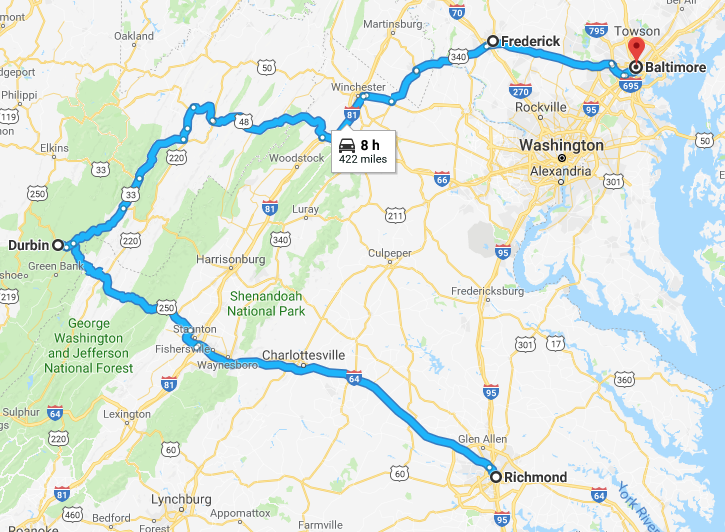
A patchwork of city-states, unbound by modern “international law”, with few barriers to the free flow of capital and population. I’ll then describe how carefully Moldbug explained that you had to have these things, or else the dictatorship would fail in more or less the ways normies expect dictatorships to fail - leaving himself no room for the kind of pivot he’s trying now. 1: Classic Moldbug Believed Populist Dictatorship Would End In Disaster Classic Moldbug admitted that fascism and communism were extremely bad. He just drew different borders around political systems: fascism, communism, third world banana republic dictatorship, and democracy all cluster together as systems where coalitions rule because they can seize temporary power in a semi-lawless society. In the various totalitarianisms, it’s literal seizing of power through armed troops or secret police; in democracy, it’s electoral seizing of power through distributing the most goodies to coalition members. From here, my bolding. Clearly, the worst forms of demotism, the really bad apes, were the totalitarian systems—fascism and communism. The main difference between fascism and communism was not in mechanism, but in origin—fascist elites tended to be militarist, communist elites intellectual. But the one-party state is a clear case of convergent evolution. To a neocameralist, totalitarianism is democracy in its full-blown, most malignant form. Democracy doesn’t always deteriorate into totalitarianism, and lighting up at the gas pump doesn’t always engulf you in a ball of fire. Many people with cancer live a long time or die of something else instead. This doesn’t mean you should smoke half of Virginia before lunch. A political party is a political party. It is a large group of people allied for the purpose of seizing and wielding power. If it does not choose to arm its followers, this is only because it finds unarmed followers more useful than armed ones. If it chooses less effective strategies out of moral compunction, it will be outcompeted by some less-principled party. When one party gains full control over the state, it gains a massive revenue stream that it can divert entirely to its supporters. The result is a classic informal management structure, whose workings should be clear to anyone who watched a few episodes of The Sopranos. Without a formal ownership structure, in which the entire profit of the whole enterprise is collected and distributed centrally, money and other goodies leak from every pore. Totalitarian states are gangster states, in other words, and they tend to corruption and mismanagement. The personality cult of dictatorship is quite misleading—a totalitarian dictator has little in common with a neocameralist CEO, or even a cameralist monarch. The difference is the management structure. The CEO and the monarch owe their positions to a law which all can obey, and those who choose to obey the law are naturally a winning coalition against those who choose to break it. The dictator’s position is the result of his primacy in a pyramid of criminals. This structure is naturally unstable. There is always some other gangster who wants your job. Dictators, like Mafia chiefs, are not good at dying in bed. The internal and external violence typical of totalitarian states is best explained, I think, by this built-in mismanagement. Dictators are violent because they have to be—they use violence as an organizing principle. The totalitarian state has no principle of legitimacy that would render it impractical for an ambitious subordinate to capture the state with a coup. European monarchs made war, sometimes they were assassinated, and there were even succession struggles, but coups in the modern sense were very rare. Note that the financial logic which keeps the neocameralist state lawful does not apply in any way to the totalitarian state, because the latter does not have a stable management structure which is controlled by its shareholders. Lawlessness is not profitable for the state as a whole, but it may be quite profitable for the part that chooses lawlessness, and in the totalitarian state no one is counting as a whole. Similarly, only shareholder control gives the neocameralist state an incentive to remain small and efficient. The totalitarian state has an incentive to become large and inefficient, because every functionary has an incentive to expand his or her own department, and no bean-counter who demands that the department do more with less. In a totalitarian state, since no gangster is permanently safe from any other gangster, there is a strong incentive for anyone with power to take what he can, while he can. And there is no disincentive for him to avoid abusing a resource which neither he nor his allies benefit from. Under gangster management, the totalitarian states often engaged not only in mass murder, but mass murder of their most economically productive citizens. I’m trying to avoid subjecting you to too many Moldbug walls of text, but this is a constant hobbyhorse of his. Unless you implement his neocameralist ideology of shareholder control, your attempted autocracy will become a totalitarian state, which will be even worse than regular democracy. 2: The Dictator Must Not Be Elected The original sin of democratic/totalitarian governments is permitting power struggles. When you permit power struggles, the most power-hungry person wins. This person is probably a bad guy. But even if he isn’t, he has to optimize for gaining and maintaining power, instead of for the national interest. This usually means paying off the people who raised him to and keep him in power, i.e. corruption. Sometimes the corruption is straightforward, like giving friendly colonels vast sums from the public treasury. Other times it’s more insidious; if someone rose to power because organized labor joined their coalition, they have to overpay public unions, pass stifling pro-labor regulations, and ban whatever productive economic activity the labor unions don’t like. Therefore, we need a dictator who came to power without a struggle and doesn’t owe anyone anything. This is Moldbug’s read on “the divine right of kings”: Divine-right monarchy is very easy to understand, even for an atheist like me. We have already derived it. To an atheist, the King’s authority must be absolute, not because he is appointed by God, but because he is appointed by no one. If someone appoints him, that man is King. If their roles are divided—the famous “balance of powers” or “checks and balances”—they will struggle, and one or the other prevail. Probably the many over the few. How do you come to power without a fight? This is a tough ask, but Classic Moldbug bit the bullet: anybody who wants power is unworthy of it. You have to just sit there being worthy. When people get tired of sucking, they’ll give you power. The Procedure [for installing a virtuous government] comes in Three Steps: 1: Become worthy. 2: Accept power. 3: Rule!!1! You think I’m kidding. But I’m not. How do you become worthy? You must absolutely, 100%, avoid any kind of candidacy in elections, protesting the government, criticizing the government, thinking you could do government better than the current government, or (god forbid) deliberately trying to take power: As a reactionary, you don’t believe that political power is a human right. You will never convince anyone to adopt the same attitude, without first adopting it yourself. Since you believe others should be willing to accept the rule of the New Structure, over which they wield no power, you must be the first to make the great refusal. They must submit to the New; you must submit to the Old. The reactionary’s opinion of USG is that it is what it is. It is run by the people who run it. And at present, the present management may well be the best people in the world to run USG, and even if they’re not he can’t imagine what might be done about it—short of replacing the whole thing. This simple and final judgment, like the death penalty, admits no possible compromise. In particular, passivism is to Gandhi as Gandhi is to Hitler. Hitler, before 1933, was a violent democratic activist; Gandhi was a nonviolent democratic activist. Passivism is not any sort of activism. Passivism is passivism. In plain English, you may not even begin to consider the rest of the Procedure until you have freed yourself entirely from the desire, built-in burden though it be of the two-legged ape, for power. Break the steel rule, change your name to “Darth,” don’t expect to keep your internship at the Jedi Council. As a matter of both principle and tactics, the passivist rejects any involvement with any activity whose goal is to influence, coerce, or resist the government, either directly or indirectly. He is revolted by the thought of setting public policy. He would rather drink his own piss, than shift public opinion. He finds elections—national, state or local—grimly hilarious. And if he needs to get from Richmond to Baltimore, he drives through West Virginia. The passivist has a term for democratic activism directed by the right against the left. That term is counter-activism. Passivism does not dispute the fact that counter-activism sometimes works. For instance, it worked for Hitler. (We’ll say more about Hitler.) However, it only works in very unusual circumstances (such as those of Hitler), and is extremely dangerous when it does work (e.g., the result may be Hitler). In case this isn’t crystal-clear, the steel rule precludes, in no particular order: demonstrations, press releases, suicide bombs, lawsuits, dirty bombs, Facebook campaigns, clean bombs, mimeographed leaflets, robbing banks, interning at nonprofits, assassination, “tea parties,” journalism, bribery, grantwriting, graffiti, crypto-anarchism, balaclavas, lynching, campaign contributions, revolutionary cells, new political parties, old political parties, flash mobs, botnets, sit-ins, direct mail, monkeywrenching, and any other activist technique, violent or harmless, legal or illegal, fashionable or despicable […] In the First Step, passivism is a no-brainer. Why should you be interested in influencing OUSG? You’re trying to replace the Structure, not join it. One clear sign that you’re doing this right and haven’t been corrupted by power is that people won’t write hit pieces about your blog. I swear I’m not making this up: [A] passivist blog will appear, at worst, harmless and extremely strange. There’s something going on here, Mr. Jones. But you don’t know what it is—do you, Mr. Jones? As an existential enemy of USG, the reactionary may well deserve some immune attention. But he won’t get it, and he is quite happy with that. True fact: the author of UR has received over 7 zillion very interesting emails, all of which deserve responses, often long, that most have not received (but will). Number of hostile communications received, in over two years of blogging: zero. One can ascribe this result to many hypotheses, not all flattering, but I put it down to passivism. If you break this rule and seek electoral power, you are punished with something terrible: right-wing populism, which is basically the same as Hitler and must be prevented at all costs. [The] third tactical benefit [of passivism is] Hitler prevention. To an orthodox reactionary, Hitler is basically the poster child for what happens if you break the steel rule. Fascism is reaction, but laced with cancerous tumors of democracy—“right-wing populism,” as people say these days. If it loses it loses; if it wins, the tumors grow. An improvement on Communism, but not much of one. Just about all of Hitler’s shtick, right down to the name of his party, was ripped off from the Left. Who introduced nationalism to the Continent of Europe? The Hapsburgs, or Garibaldi? Under this camouflage, which never convinced anyone with a college education, Nazism was never in any way leftist. Rather, it was a demotic corruption of the old Prussian tradition […] Since most people are neither historians nor philosophers, the fact that Hitler was on the extreme Right, and this Reaction is also on the extreme Right, raises some natural concerns. Again: the only way to face these concerns is to (a) provide a complete engineering explanation of Hitler, and (b) include an effective anti-Hitler device in our design. The reactionary’s basic answer to the Hitler Question is the Law of Sewage. (This is not my invention, but I don’t know where I got it. Heinlein, perhaps?) The Law is: if you put a drop of wine in a barrel of sewage, you get sewage. If you put a drop of sewage in a barrel of wine, you get sewage. You’ll find that this rule applies perfectly to many fields of human endeavor. Thus, Nazism contains a great deal of reactionary wisdom, because those who created it were quite familiar with the old Continental tradition of government. However, the Nazi movement originated as a democratic political party. Thus Nazism combined the venom of democracy with the experience and efficiency of Prussia, an understandably dangerous combination […] This is where passivism, by abjuring democracy, vaccinates itself against Hitler. True: at a higher level, the reactionary seeks to cause a transition in power, and thus in a sense seeks power itself. But he is not an activist, because he is not working for power. His actions do not excite the human political instinct, the love for forming coalitions and tearing hell out of the apes across the river. For one thing, said actions bear no resemblance to normal politics. For another, they cannot bring any actual power to the actors, even if they succeed. Which, however likely, must remain intuitively implausible—if not laughable. And thus the project of reaction does not attract those with a real taste for power, which if nothing else is very un-Nazi-like. In other words - the failure mode of neoreaction (good) is right-wing populism eg Nazism (bad). You’ll know you’ve fallen into the failure mode if your reactionary movement starts with a democratic political party, or if its members are feeling normal human political emotions. If you can’t have a normal democratic party, how do you complete steps two and three - accepting power and ruling? Moldbug’s answer is complicated and not very related to our topic, but he thinks you first create the Antiversity, a shadow university system laser-focused on always telling the truth. Then you bootstrap it into a shadow government, which doesn’t engage in violent revolution or political campaigning, but just sits there being right about things (I’m imagining for example a shadow FDA that produces better drug information than the real FDA, so people gradually come to trust the shadow FDA more even though its rulings have no legal effect). Then people gradually switch their allegiance from the real government to the shadow government, until finally the shadow government proposes a pseudo-candidate in an election whose sole platform is “switch power from the real government to the shadow government”. Once he wins, he revokes the Constitution, implements the shadow government charter, and resigns. Why do you have to use this weird process instead of taking power the normal way? Because if you take power the normal way, you will fall into the trap of right-wing populism and become like Hitler: You start to see the difference between this and the Nazis. For the Nazis, the equivalent of the Antiversity was… Hitler. Have you read Hitler? I have. (The Table Talk is the Hitler to read.) Frankly, Hitler reads a lot like me, if I lost 25 IQ points from drinking lead soda, and also had a nasty case of tertiary syphilis. I may have some of Hitler’s talents—I will be the first to admit it. But I have no intention of applying for his job. I would never be able to do it, anyway. I don’t think anyone could. 2.5: The Dictator Must Not Need Anyone’s Approval This is a trivial extension of the previous point - “If someone appoints [the King], that man is King”. If the people appoint the King, the people are King, and then you’re a demotic totalitarianism. How do you avoid dependence on other people’s approval? In a democracy, you need the approval of 51% of people to win the next election; in a traditional dictatorship, you need the approval of the secret police or military to keep crushing your opponents. The reason [an unquestioned autocracy with no dissent] is peaceful and free is that we’ve defined [the autocrat’s] primary right so that it works just like a secondary right, [ie his legal rights are completely enforced by real power/control.] Hitler, Stalin and Mao, on the other hand, had enemies. Stalin and Mao, especially, basically operated under the assumption that everyone in the world wanted to kill them and take their jobs. After a while this was quite the self-fulfilling prophecy. Terrorist government—as in the Reign of Terror, a usage that’s unfortunately lapsed—is a consequence not of absolute primary title, but of insecure primary title. It is best understood as a form of civil war. So a dictator who still has enemies risks being crazy and genocidal. We’ll never get a dictator with nobody who dislikes him, but can we get a dictator with effectively no enemies - ie one whose enemies have zero chance of seizing power and so who might as well not exist? Yarvin admits this is a tough problem, but suggests cryptographically-locked weapons: In a full CDCC government, the sovereign decision and command chain is secured from end to end by military-grade cryptography. All government weapons—not just nukes, but everything right down to small arms—are inoperable without code authorization. In any civil conflict, loyal units will find that their weapons work. Disloyal units will have to improvise. The result is predictable, as results should be. That is, all weapons need a key to fire (or have a key that can prevent them from firing). The dictator owns the key. He can selectively disable weapons of rebel forces, allowing even the tiniest remnant of loyalists to easily overpower them. There are probably some implementation difficulties here; the point is that it’s definitely not democracy, nor even some kind of two-bit dictatorship where the dictator depends on the continued goodwill of the army. Why go to these lengths? Because without them, the dictator needs to curry favor through various corrupt strategies that undermine the national interest. Of these, the most malignant - the one Moldbug holds his deepest vituperation for - is fake news. Democratic parties necessarily lie, because they are not infinitely correct about everything, but they need the public to think they are. In order to maintain the support of the masses, they will lie about the nature of their policies, the details of their policies, and especially the success of their policies. There are two kinds of government: those whose formula of legitimacy depends on popular consent, and those whose doesn’t. Following contemporary usage, we can classify these as authoritarian and democratic. An authoritarian state has no need to tell its subjects what to think, because it has no reason to care what they think. In a truly authoritarian government, the ruling authority relies on force, not popularity. It cares what its subjects do, not what they think. It may encourage a healthy, optimistic attitude and temperate lifestyle proclivities, but only because this is good for business. Therefore, any authoritarian state that needs an official religion must have something wrong with it. (Perhaps, for example, its military authority is not as absolute as it thinks.) A democratic state which tells its citizens what to think is a political solecism. Think about the motivation for democracy: it consigns the state to the collective responsibility of its citizens, because it feels this is an independent and well-anchored hook on which to hang the common good. Once the republic has an established church, this hook is no longer independent, and the (postulated) value-add of democracy is nullified. Without separation of church and state, it is easy for a democracy to indulge itself in arbitrarily irresponsible misgovernment, simply by telling its bishops to inform their congregations that black is white and white is black. Thus misdirected, they are easily persuaded to support counterproductive policies which they wrongly consider productive. Moldbug warns that this is especially characteristic of right-wing populism, which is why he [Moldbug] is relieved when right-wing populism loses: The entire political structure of the American populist tradition is set up to select for ignorance and stupidity, and select against organization and cohesion. Thus it is simultaneously undesirable and ineffective, and even those of us who like myself sympathize with it to a considerable degree are often slightly relieved to see it lose, as it always does. 3: The Dictator Must Be Limited By A Board Of Directors How do we know that the dictator won’t have terrible policies, or be sadistic, or rename every state to “Statey McStateFace” just for fun? Moldbug proposes running the dictatorship as a joint-stock corporation. This helps in two ways. First, the dictator will be checked by a board of directors, who can fire him if he goes crazy. Second, the board of directors (or the investors who elect them?) will be aligned because they have stock. The stock goes up if the nation does better. If the dictator tries to kill the Jews and the market thinks that’s bad for business, then the directors will fire and replace the CEO. What happens if the controllers disagree on what “responsible” government means? We are back to politics. Factions and interest groups form. Each has a different idea of how Steve should run California. A coalition of a majority can organize and threaten him: do this, do that, or it’s out with Steve and in with Marc. Logrolling allows the coalition to micromanage: more funding for the threatened Mojave alligator mouse! And so on. That classic failure mode, parliamentary government, reappears [...] Actually, there’s one way to do it. We can define responsibility in financial terms. If we think of California as a profitable corporation, a capital asset whose purpose is to maximize its production of cash, we have a definition of responsibility which is not only precise and unambiguous, but indeed quantitative...We have, of course, reinvented the joint-stock company. There is no need to argue over whether this design works. It does. How would the board of directors remove a dictator who didn’t want to be removed? If the country is running on the cryptographically-locked weapon system discussed earlier, the directors will have a higher-level key that can overrule the dictator’s key and make sure that factions loyal to the board have working weapons while those loyal to the dictator don’t. How would the system guard against the dictator arresting the directors and torturing the key out of them? Maybe the directors could live in foreign countries (remember, they aren’t motivated by patriotism - they just want their stock to go up). Or maybe some of this process can be done cryptographically, so that nobody knows how many shares people have, how they voted, or even who the directors are at any given time. If the dictator started poking around to try to figure this out, the directors could remove him. I bring this up partly because 2025-Yarvin has been pushing the corporations vs. democracies argument pretty hard recently. Corporations, he argues, are nimbler and better-run than democracies. A big part of their advantage is that the buck stops with an autocratic CEO instead of a limited President. Therefore, to improve upon democracy, give President Trump the limitless powers of a corporate CEO. [When people ask me why I think monarchies are better than democracies] I ask them to look around the room and basically point out everything in the room that was made by a monarchy. Because these things that we call companies are actually like monarchies. And then you’re looking around yourself and you see, for example, a laptop. And that laptop was made by Apple, which is a monarchy. Whereas if your MacBook Pro was made by the California Department of Computing, you can only imagine it […] I think that if you took any of the Fortune 500 CEOs, some of them are good, some of them are bad. But the overall quality, just pick one at random, and put him or her in charge of Washington, and I think you’d get something much, much better than what’s there […] One of the things about monarchy that’s been known for quite some time—and again, even in very, very anti-monarchial regimes and periods, an exception is made for this—is that a ship always has a captain. An airplane always has a captain. Basically, in any very safety-critical environment … you should have someone in charge. But even granting that corporations are better-governed than democracies, this comparison doesn’t work. Corporate and national governance are trying to solve different problems. Corporate governance asks “Given pre-existing rule of law and the certainty that all of our bylaws will be enforced by a greater power, how do we ensure competent administration?” National government asks “How do we generate rule of law out of nothing in a way that can prop itself up and defend against attacks?” What prevents Tim Apple from refusing to pay dividends to Apple investors and keeping all the profit for himself? Easy question, it’s the United States government, no problem here. What prevents Donald Trump from murdering America’s five richest billionaires and taking their stuff? The police? What about the thing where Trump is the police chief’s boss’s boss’s boss’? Awkward, but that’s why we have separation of powers, checks and balances, government-of-law-and-not-of-men, all that stuff. What prevents Donald Trump from calling in the military to arrest all the other separate powers that are supposed to check and balance him? Uh, more separation of power, different checks and balances, some sort of loyalty to the Constitution. When Yarvin points out that companies thrive without separation-of-powers, that’s because they never encounter the problem that separation of powers was intended to solve. Classic Moldbug understood this well, which was why he proposed a separate power capable of checking his dictator - the board of directors1 - and a mechanism for keeping the system stable against power grabs - the cryptographic weapons. But the regime he boosts today has nothing like this, so it’s facile to use the corporate comparison argument. 4: The Dictator Must Be Embedded Within A Patchwork Of Similar Corporate City-States. Architectonics already did a great job covering this one. Read his Part 1 and Part 2, then meet me back here for the Conclusion section. At Long Last, I’ve Created The Populist Strongman From My Classic Series Of 11,000 Blog Posts “Don’t Create The Populist Strongman” I enjoyed reading Unqualified Reservations, way back in 2013. I didn’t agree with it, but I thought some parts of it were good, and even the bad parts helped me think clearly about the nature of power. I hoped the neoreactionaries would take the good parts, ditch the rest, and build something useful out of it. I think some people, mostly outside the organized neoreactionary movement, did exactly that (subscribers-only post, sorry). Unfortunately, Yarvin went the opposite direction, jettisoning the good stuff in favor of the bad. All the warnings against populism, party politics, corrupt power-seeking officials, misinformation, and mobocracy have been filed away in favor of a Flanderized “maybe dictatorship is good”. One reason I respect Sam Altman is that back in 2016, when he founded an AI charity to bring a positive singularity to the world, he realized that it would later be extraordinarily tempting to turn it into a normal profit-focused company and get rich. So he tied himself to the mast by designing a nonprofit structure capable of thwarting all the machinations his future self could throw at it. A few years later, he gave into temptation, tried to turn it into a normal profit-focused company, and failed, because the structure he designed was really good. This was the best possible outcome, and one of many reasons I number him among the all-time greats. Moldbug deserves a similar level of respect. He clearly saw that the failure mode of his philosophy was that power-seeking people would use it to support right-wing populism. He included a fantastic number of tests to determine whether any given self-professed reactionary was the real deal or a false prophet, begging his readers to apply them carefully to anyone claiming the mantle of reaction. Then he got corrupted by power and tried to use his philosophy to endorse right-wing populism. But the tests are still there! Anyone who reads through 11,000 blog posts can see all the red flags where Moldbug says “…and if I ever do X, then I’ve sold out and you should stop listening to me.” Another all-time great! Just the few posts I’ve highlighted in this essay have listed over a dozen tests - by tests I mean something where Moldbug says something is an absolutely vital feature of the new regime, or that without it things would descend into kleptocracy, or that this is the only safeguard against Hitler, or something along those lines. These include: The reactionary party always tells the truth
Inline links: here, The Sopranos, Divine-right monarchy, through West Virginia, Mr. Jones, Moldbug’s answer, Reign of Terror, suggests cryptographically-locked weapons, they will lie, is relieved when right-wing populism loses, proposes running the dictatorship as a joint-stock corporation, has been pushing the corporations vs. democracies argument pretty hard recently, 1, Part 1, Part 2, did exactly that, and failed
No direct inline source block was recovered for this mention.
Minnesota and Virginia also have legislation to enable cities to implement land value taxes. We are monitoring these efforts.
Contact: Ross Contact Info: adamisom[a t]hey[period]com Time: Saturday, October 11th, 3:00 PM Location: Liberty Park, near the ChargePoint station Coordinates: https://plus.codes/85GCP4WF+MF Group Link: there's a mailing list and Discord, please ask at the meetup! :) Virginia FREDERICKSBURG Contact: Michael Wagner Contact Info: wagner[period]michaeldavid[a t]gmail[period]com Time: Thursday, September 25th, 7:00 PM Location: Kickback Jacks, 10145 Southpoint Pkwy, Fredericksburg, VA 22407 Coordinates: https://plus.codes/87C46FRV+49 Notes: I’ll be in a dress shirt and have an “ACX Meetup” sign or card, and try and sit near the door. I am also a member of the Richmond ACX meetup, and hope this can be a part of a larger mid-central Virginia ACX meetup community.
Inline links: https://plus.codes/85GCP4WF+MF, https://plus.codes/87C46FRV+49
Contact: Michael Wagner Contact Info: wagner[period]michaeldavid[a t]gmail[period]com Time: Thursday, September 25th, 7:00 PM Location: Kickback Jacks, 10145 Southpoint Pkwy, Fredericksburg, VA 22407 Coordinates: https://plus.codes/87C46FRV+49 Notes: I’ll be in a dress shirt and have an “ACX Meetup” sign or card, and try and sit near the door. I am also a member of the Richmond ACX meetup, and hope this can be a part of a larger mid-central Virginia ACX meetup community.
Inline links: https://plus.codes/87C46FRV+49
Contact: Ross Contact Info: wearenotsaved[@]gmail[.]com Time: Saturday, April 11th, 3:00 PM Location: Liberty Park West Side Near the Chargepoint charging station Coordinates: https://plus.codes/85GCP4WF+VJ Virginia WILLIAMSBURG Contact: Jough Contact Info: joughdonakowski[@]gmail[.]com Time: Friday, May 1st, 6:00 PM Location: Bonanza Social Kitchen, 220 Monticello Ave Unit M, 2b, Williamsburg, VA 23185, likely a table in the back Coordinates: https://plus.codes/879577JG+JP Group Link: https://discord.gg/qZp [remove this bit] sXxV89 Notes: Please RSVP via email so I can estimate a headcount and arrival times as the location will close at 8:30
Inline links: https://plus.codes/85GCP4WF+VJ, https://plus.codes/879577JG+JP
Backlinks
- ACX Grant
- ACX Grants 1-3 Year Updates
- Biography of Jason Shea, 44th US President
- Book Review: Fussell On Class
- Book Review: The Geography Of Madness
- Class X
- Concepts: C
- Costa Rica
- Eisenhower
- Graham
- Henrietta Lacks Seems Like A Nice Person, But Not A Scientific Hero
- Highlights From The Comments On AI Geoguessr
- Highlights From The Comments On Bobos In Paradise
- Highlights From The Comments On Lynn And IQ
- Highlights From The Comments On San Fransicko
- 15
- Mantic Monday: Dogs In Wizard Hats
- Maryland
- Meetups Everywhere 2024: Times & Places
- Meetups Everywhere 2025: Times and Places
- Meetups Everywhere Spring 2025: Times & Places
- Meetups Everywhere Spring 2026: Times & Places
- Moldbug Sold Out
- North Carolina
- People: E
- Places: M
- Places: R
- Places: V
- Prison And Crime: Much More Than You Wanted To Know
- Richmond
- Shaked Koplewitz
- Spring Meetups Everywhere 2023
- Spring Meetups Everywhere 2024